Voices in the Hollow: The Race to Save Appalachia's Oldest Songs Before They Go Silent Forever
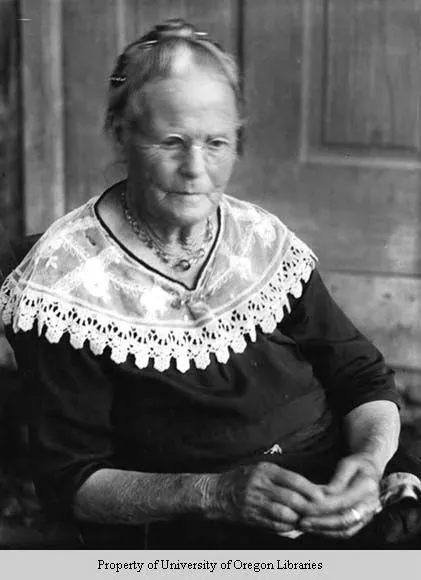
Somewhere in a clapboard house tucked into a North Carolina holler, a 91-year-old woman is the last living person who knows a particular ballad. It came to her from her grandmother, who got it from hers, carried across an ocean from the British Isles sometime in the 1700s and reshaped — slowly, quietly — by the ridgelines and hardships of mountain life. When she's gone, that song goes with her.
That's not a metaphor. That's just math.
And it's the math that keeps people like Donna Ledford up at night. Ledford is a community archivist based out of Sylva, North Carolina, who has spent the better part of fifteen years driving backroads with a digital recorder and a thermos of coffee, knocking on doors and asking old-timers if they'd be willing to sing something their parents taught them. The answer, more often than she expected, is yes.
"People want to be heard," she says. "They want somebody to care that they know something rare. The hardest part isn't getting them to sing — it's getting there before it's too late."
More Than Old Music
It would be easy to file this whole effort under "nostalgia" and move on. But that would miss the point entirely.
Appalachian ballads — particularly the so-called "murder ballads" and "lonesome songs" that form the backbone of the tradition — aren't just pretty artifacts. They're primary sources. They document labor disputes, domestic violence, religious tension, land theft, and community grief in ways that official historical records simply don't. Songs like "Tom Dooley," "Pretty Polly," and dozens of lesser-known variants carry coded information about how people lived, who held power, and how ordinary mountain folks made sense of tragedy when the outside world wasn't paying attention.
Dr. Marcus Holt, a musicologist at Appalachian State University who has been cataloging regional song variants for over two decades, puts it plainly: "These songs are resistance narratives. They're how communities processed injustice without access to courts or newspapers or any real institutional power. When we lose a variant, we lose a chapter of history that exists nowhere else."
That's a sobering thought. And it gets more sobering when you consider the pace of loss.
The Numbers Are Not Good
The Southern Appalachian region is home to — or was home to — an estimated several thousand distinct traditional song variants, many of which exist in no written form and have never been commercially recorded. Ethnomusicologists believe that a significant portion of those have already been lost in the past fifty years, victims of rural depopulation, the passing of elder generations, and the simple cultural gravity of television, streaming, and a broader American monoculture that doesn't leave much room for a unaccompanied ballad sung in an old modal tuning.
The scholars who study this stuff will tell you that the window is closing fast. The generation that grew up learning songs at their grandparents' knees — people who came of age before the 1960s — is in its final chapter. The informal oral pipeline that kept these songs alive for centuries has been interrupted, and no amount of YouTube uploads or Spotify playlists can fully replace what happens when an old woman teaches a young one how to shape the vowels just right on a particular verse.
"Recording matters," says Ledford. "But it's not the same as transmission. A recording is a photograph. Transmission is the living thing."
The People Doing the Work
Across the region, a loose network of archivists, community musicians, university programs, and passionate amateurs is trying to do both — capture what can be captured, and pass along what can still be passed.
The Southern Appalachian Music Preservation Project, a volunteer-driven effort based in western North Carolina, has recorded over 400 hours of field recordings in the past decade, focusing specifically on singers over the age of 70 who learned their repertoire through oral tradition rather than commercial sources. They work with local libraries and historical societies to index and store the recordings, and they've begun hosting listening sessions in schools — not to teach kids to sing the old songs necessarily, but to help them understand that those songs belong to them.
In eastern Tennessee, a small community music school has started pairing elder tradition bearers with teenage students in a structured apprenticeship program modeled loosely on similar efforts in Irish and Scottish folk communities. Early results are modest but real — a handful of young people who can now sing songs their great-grandparents knew, and who understand why that matters.
"You can't force it," admits one of the program's organizers. "But you can create conditions where it's possible. Where there's space for it."
What Gets Lost When the Songs Go
Ask anyone deep in this work what keeps them going, and they'll usually circle back to something personal — a grandmother's voice, a song heard at a funeral, a melody that surfaced in a dream. But they'll also talk about something harder to name: the sense that these songs carry a particular way of being in the world. A relationship to grief, to landscape, to community, that doesn't have an easy modern equivalent.
Appalachian music — even at its most mournful — is not passive. It's a way of bearing witness. Of saying: this happened, and we are still here, and we remember. The murder ballads especially, for all their dark subject matter, are acts of communal memory-keeping. They say the name of the dead. They hold someone accountable, even when no court did.
When that tradition fades, something harder to quantify fades with it. Not just a sound, but a posture toward history itself.
Donna Ledford recorded a woman last spring — she won't share the name without permission — who sang a variant of an old English ballad that Ledford had never heard before, with a verse that appeared in no existing archive. The old woman had learned it from her mother, who had learned it from hers. Three generations of memory, encoded in a tune.
"I cried on the way home," Ledford says. "Not because it was sad, exactly. Because it was still there. Because we got there in time."
That's what this work feels like, on a good day. Getting there in time.
If you know an elder singer in your community who carries old songs, the best thing you can do is ask them to share — and if they're willing, hit record.