Stirring the Pot: The Appalachian Grandmothers Racing to Save Their Family's Food Soul
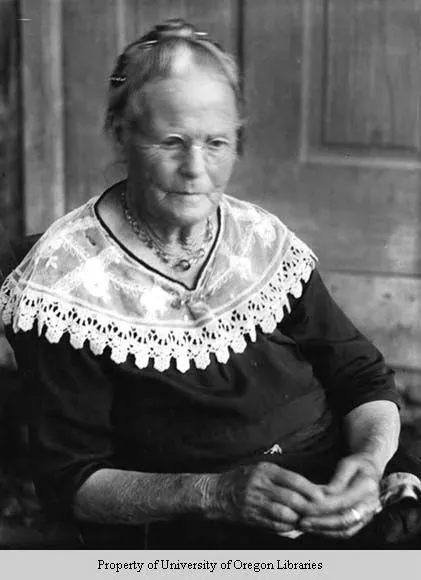
Photo: Unknown, Public domain, via Wikimedia Commons
The handwriting is faded on the index card, the grease stains suggesting decades of use, the measurements written in the confident shorthand of someone who never once doubted her own instincts in a kitchen. A handful of this. Cook till it smells right. You'll know.
For Dottie Hensley, 81, of Clintwood, Virginia, that card — her mother's recipe for stack cake — is both a treasure and a terror. A treasure because it exists at all. A terror because she's not entirely sure anyone in her family knows what you'll know actually means anymore.
"That's the whole problem," Dottie says, laughing and shaking her head at the same time. "My mother cooked by feel. Her mother cooked by feel. And somewhere along the way, we stopped standing next to them long enough to learn the feel."
She's been working for three years now to translate that feel into something a granddaughter in Knoxville — one who learned to cook from YouTube — might actually be able to follow.
The Stakes Are Real
Appalachian food is having a cultural moment. Chefs in Asheville and Lexington are putting ramps and sorghum and pinto beans on menus that charge city prices for the food of subsistence farmers. Food writers are discovering the depth and ingenuity of a cuisine built on making extraordinary things from humble ingredients. And yet, the women who actually hold the living knowledge of how this food is made — the ones who learned it in the kitchens where it was born — are aging, and the window for capturing what they know is narrowing every year.
This isn't abstract. When an Appalachian grandmother dies without passing on her leather britches beans or her apple stack cake or the particular way she seasons a cast-iron skillet, that knowledge doesn't go to a library. It goes with her.
Dottie's Stack Cake Chronicles
Dottie Hensley grew up in a coal camp household where food was serious business. Her mother fed seven children on a budget that required creativity, patience, and a deep understanding of what the pantry and the garden could produce together.
Stack cake — layers of thin gingerbread-spiced cake stacked with cooked dried apple filling — was the wedding cake of the mountains for generations. You brought a layer, your neighbor brought a layer, and together you built something celebratory out of what everyone had on hand.
"It's a community food," Dottie says. "That's what people don't understand about Appalachian cooking. It was never just about feeding yourself. It was about feeding each other."
She's now compiled what she calls her Real Book — a three-ring binder stuffed with tested, annotated recipes, handwritten notes about where each dish came from, and photographs of the finished products. She's made copies for each of her four children and has started hosting what she calls "kitchen Saturdays" with her granddaughters, cooking through the book one recipe at a time.
"I tell them, I'm not teaching you to cook," she says. "I'm teaching you to remember."
Wanda's Beans and the Art of the Slow Lesson
About forty miles north, in a house that smells permanently of woodsmoke and coffee, Wanda Mullins, 69, has a different philosophy about preservation. She's suspicious of recipes altogether.
"A recipe is a starting point," she says flatly, stirring a pot of October beans that have been on the stove since eight in the morning. "It's not the thing itself. The thing itself is in your hands and your nose and how your grandmother made you stand next to her while she worked."
Wanda raised three kids in Letcher County, Kentucky, and now spends considerable energy making sure her seven grandchildren spend real time in her kitchen — not watching, but doing. Shelling beans. Rolling biscuit dough. Learning to judge cornbread by the sound it makes when you tap the crust.
She's also been working with a local community college's oral history program, sitting for recorded interviews about the food traditions of her community. She talks about what it meant to put up a summer's worth of vegetables. She talks about the social architecture of canning season — who helped whom, what was traded, how the work built relationships that lasted all year. She talks about food not as nutrition but as language.
"When I make these beans the way my mother made them, I'm saying something," she explains. "I'm saying: this place is real, these people were real, and we fed each other and kept going. That's worth saying."
Shirley's Fight Against the Stereotype
Shirley Damron, 74, of Morgantown, West Virginia, has a different fight on her hands. A retired schoolteacher with a sharp wit and a sharper opinion about the way Appalachian food gets portrayed, she started a community cooking class specifically to push back against what she calls "the dumpling and poverty narrative."
"People think we just ate whatever we could scrape together and called it culture," she says. "But our food is sophisticated. The preservation techniques, the fermentation, the layering of flavors — it's as complex as any cuisine in the world. It just didn't come with a French accent."
Her classes, held twice a month in the fellowship hall of her church, focus on dishes that showcase that complexity: souse meat, pickled corn, ramp kimchi that nods to the Korean fermentation tradition while staying rooted in mountain ingredients, sweet potato stack cake variations, and a dozen different ways to cook a dried bean that would make a French cassoulet feel uncomplicated.
"I want young people to be proud," Shirley says. "Not defensive. Proud. Because there is so much here to be proud of."
Pauline's Recipe Box and What's Inside It
The oldest of our kitchen keepers is Pauline Sexton, 86, of Erwin, Tennessee, who still cooks her own meals every day and has no patience for the idea that her knowledge might be lost.
"It won't be lost if somebody pays attention," she says simply.
Her great-niece, 28-year-old Kayla, has been paying attention. She drives up from Johnson City every few weeks, phone camera rolling, asking Pauline to cook and talk at the same time. The resulting videos — unpolished, unhurried, narrated in Pauline's unhurried mountain cadence — have quietly accumulated thousands of views on social media from people who grew up eating this food and people who never have but feel somehow like they've been missing it.
"I didn't think anybody outside the family would care," Kayla admits. "But they do. They really do."
Pauline just shakes her head at the phone, still slightly baffled by the whole enterprise, and keeps stirring.
The Work Continues
What these four women share, beyond their geography and their cast-iron skillets, is a sense of purpose that goes beyond nostalgia. They're not trying to freeze time. They know the mountains have always changed, always adapted, always taken new things in and made them their own.
They just want to make sure that when the next generation reaches for something to hold onto, there's something there to grab.
One recipe at a time. One kitchen Saturday at a time. One pot of beans simmering low and slow until it smells right.
You'll know.