Stones That Weren't Fences: The Mystery Behind Appalachia's Ancient Rock Lines
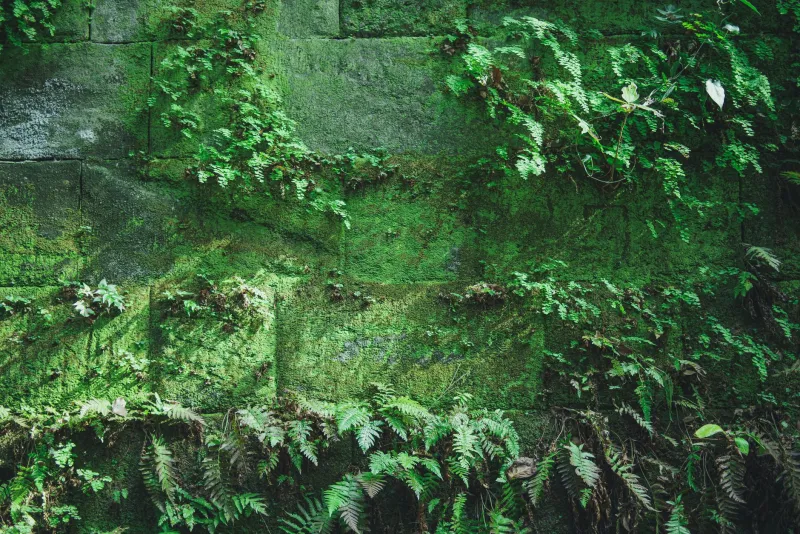
Walk far enough into the woods above most any old homeplace in Southern Appalachia and you'll find them — low, deliberate lines of stacked stone running through the trees like somebody's unfinished thought. No gates. No corners that make a proper enclosure. Sometimes they stop dead in the middle of nowhere, as if the builder just set down the last rock and walked away without explanation.
They're not fences, exactly. They're not retaining walls. And they're definitely not accidents.
For generations, folks have stepped over these things on their way to hunt or gather or just wander, and most haven't given them much thought. But land historians, archaeologists, and a quiet community of mountain people who grew up hearing stories about the old ways are starting to pay closer attention. What they're finding raises more questions than it answers — and that might be exactly the point.
Clearing the Field, or Something Else?
The easy explanation is the practical one. Early Appalachian settlers, scratching out farms on steep, rocky ground, had to move stone to plow. You dig it up, you stack it somewhere. You get a wall. Simple.
Except it isn't always that simple.
"If field clearing was all this was, you'd expect the walls to follow the field edges," says Dr. Leanna Prewitt, a cultural landscape historian based in western North Carolina who has spent years documenting stone structures across the Southern highlands. "But a lot of these walls don't do that. They cut across slopes, they follow ridge lines, they end in the middle of forested ground that was never likely cultivated. Something else is going on with at least some of them."
Prewitt's research has catalogued hundreds of stone features across six counties, and she's found that a significant number appear to predate the land grant era entirely — meaning they may have been laid down before European settlers were even filing formal claims. A handful of sites she's documented show construction techniques consistent with Cherokee boundary-marking practices, though she's careful to note that the evidence is still being studied.
What she's more confident about is this: the people who built these walls understood the land in ways that don't translate neatly into modern categories like "practical" and "ceremonial."
The Line Between Yours and Mine
Property law came late to the mountains, and when it did arrive, it didn't always stick the way the lawyers intended. Early mountain communities operated on a different set of understandings about who owned what — understandings that were more relational than legal, more about memory and mutual recognition than surveyed plats.
In that context, a stone wall wasn't just a physical boundary. It was a statement that both neighbors could see, touch, and agree upon. It was a way of saying we both know this line exists without needing a courthouse to back it up.
"There's a term some old-timers used — 'witness stones,'" says Harlan Blevins, a retired county surveyor from Lee County, Virginia, who has spent his off hours chasing down the history of boundary markers across the region. "Not official survey monuments. Just rocks that people placed where two families agreed a line ran. Everybody knew. Nobody wrote it down. The stone was the record."
Blevins has walked hundreds of miles of old property lines in his career, and he says the informal stone-marking tradition persisted well into the twentieth century in some remote hollows. "I've talked to people in their eighties who remember their grandfathers walking them out to a certain pile of rocks and saying, 'This is where our land ends.' No deed language. No survey pins. Just the stones."
When the Practical Gets Spiritual
But even witness stones don't explain everything. Some of the structures Prewitt and others have documented seem to have served purposes that sit at the edge of what modern researchers are comfortable calling spiritual — or at least intentional in a way that goes beyond the merely functional.
In certain communities, particularly those with strong Scots-Irish and Welsh roots, there are oral traditions about placing stones at property corners to "settle" the land — to formalize a family's connection to a place in a way that went beyond legal ownership. Some accounts describe the placing of a specific kind of stone, often quartz or a locally distinctive rock type, at corners or along lines as a kind of blessing or protection.
"The line between practical and spiritual wasn't as clear for those folks as it is for us," Prewitt says. "Marking your boundary wasn't just a legal act. It was a declaration to the land itself, to your neighbors, and maybe to whatever else was out there, that this place had people who were responsible for it."
That framing resonates with Donna Rae Mullins, who grew up on a farm in Breathitt County, Kentucky, and remembers her grandmother warning her never to move the old stones along the back fence line. "She didn't say why, exactly. Just that those rocks were where they were supposed to be, and moving them would bring trouble. I thought it was superstition when I was little. Now I think she was talking about something real — about respect for the way things had been arranged."
Reading What's Left
The challenge with studying these structures is that so much of the knowledge that would explain them is gone. The people who built them didn't leave written records, and the oral traditions that carried the meaning forward have thinned with every passing generation.
What remains are the stones themselves, patient and heavy in the leaf litter, and the landscape they inhabit. And increasingly, researchers are learning to read that landscape more carefully.
LiDAR technology — aerial scanning that can see through forest canopy to reveal ground-level features — has opened up new possibilities for mapping stone structures across large areas. Projects in several Appalachian states have begun systematic surveys, and the preliminary results suggest that the density of stone features in some areas is far higher than anyone previously estimated.
"We're finding walls in places where there's no record of settlement, no record of cultivation," Prewitt says. "That's going to take some explaining."
Blevins, for his part, thinks the explanation will turn out to be human and complicated and probably not reducible to any single theory. "People built things for all kinds of reasons. Practical, personal, spiritual, sentimental. Why would stone walls be any different?"
The Weight of a Placed Stone
There's something worth sitting with in the idea that people once marked their relationship to land not with paper and ink, but with stone — with something heavy enough to last, something that required real physical effort to place and real physical effort to move.
In a landscape where so much has been logged, graded, paved, and subdivided beyond recognition, these old lines of rock persist. They've outlasted the families who built them, the farms they once defined, and most of the stories that explained them.
Maybe that's the point. Maybe a people who understood that land outlasts people built their markers accordingly — not in documents that could burn or be contested in court, but in something older and more stubborn.
The stones are still out there. Walk far enough into the right hollow, and you'll find one. Step over it carefully. Somebody put it there on purpose.