Steam, Steel, and Memory: The Vanishing Sound That Once Held Appalachia Together
Ask Delbert Combs what time supper used to be, and he won't mention a clock. He'll tell you about a train.
"Mama started pulling the cornbread when she heard the 4:10 come through," says the seventy-eight-year-old retired miner from Harlan County, Kentucky. "That whistle echoed off Puckett Ridge just so. She didn't need to look at nothing. She just knew."
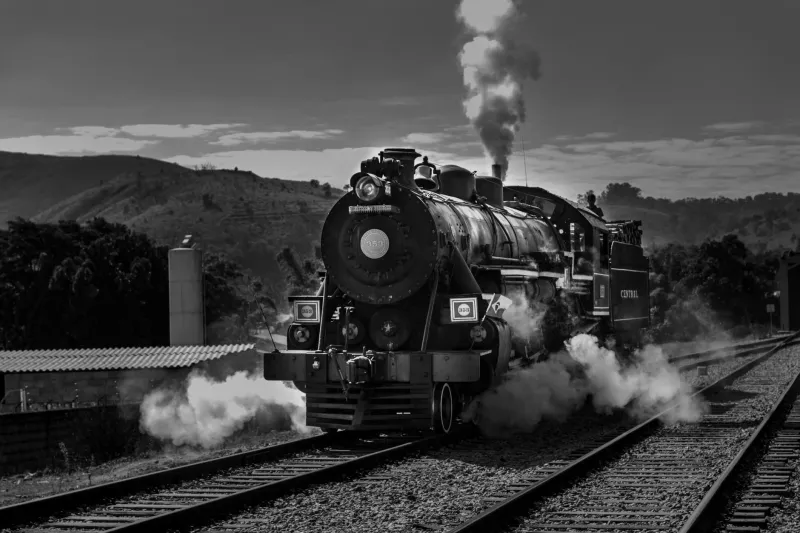
For the better part of a century, the sound of freight and coal trains moving through Southern Appalachian valleys wasn't background noise. It was the pulse of daily life — a sonic calendar that told families when to wake, when to worry, and when to expect a husband home from the tipple. Those whistles were played by human hands, shaped by individual engineers who developed their own signature calls, and recognized by communities the way you'd recognize a neighbor's voice.
Today, that sound is nearly gone. And with it, a layer of regional memory that can't quite be replaced.
More Than a Warning Signal
The federal railroad horn regulations most people know today — that long-long-short-long pattern at crossings — are a relatively modern standardization. What old-timers remember is something far more personal.
"Every engineer had his own style," explains Wanda Sexton, a sound archivist based in Asheville who has spent the last decade recording oral histories from retired railroad workers across western North Carolina and eastern Tennessee. "Some men had a short-short-long that almost sounded playful. Others pulled something real mournful, especially late at night. People along the line could tell you who was driving just by the sound of it."
Sexton started her project after her own grandfather — a Norfolk and Western man for thirty-one years — passed away without anyone ever having recorded him talking about his work. "I realized we were about to lose an entire acoustic world," she says. "Not just the sounds themselves, but the stories attached to them."
Her archive now holds recordings of nearly forty aging railroad workers, plus hours of community testimony from people who grew up alongside active lines. What emerges from those tapes is striking: the whistle wasn't just a safety device. It was a language.
Engineers used specific patterns to signal their families as they passed through town. A widow in Paintsville, Kentucky, told Sexton her late husband always blew two short blasts followed by a long one when he passed the ridge above their house — his way of saying he was okay and coming home. She said she slept with the window cracked for years after he retired, still half-listening for it.
The Coal Corridor Goes Quiet
The decline of Appalachian rail traffic isn't news, exactly. The collapse of the coal industry through the 2010s took a brutal toll on the freight lines that had threaded through mountain communities since the late 1800s. Branch lines were abandoned. Maintenance was deferred. Crews were cut.
But the cultural fallout has moved slower than the economic one, and it's only now — as the last generation with living memory of active rail culture ages out — that people are starting to reckon with what's disappearing.
Robert "Bobby" Tackett, eighty-three, worked the Clinchfield Railroad out of Erwin, Tennessee, for nearly four decades. He remembers a time when the sound of trains was so woven into life in that valley that people genuinely couldn't sleep without it.
"When they cut the night runs back in the nineties, folks complained they couldn't rest," he says with a dry laugh. "Too quiet. Ain't that something? The silence kept them up."
Tackett also notes that the shift away from steam — and later, the introduction of electronic air horns — changed the character of the sound entirely. "Steam whistles had warmth to them. They weren't just loud, they had a tone, almost like a voice. These new electric horns, they're just — noise. There's nothing human about it."
What Sound Carries That Writing Can't
There's a reason Sexton's oral history project leans so heavily on audio rather than transcription. Some things don't survive the translation to text.
"When a seventy-year-old man sits down and tries to imitate the whistle he grew up hearing, and his voice breaks a little — you can't write that," she says. "That's grief. That's love. That's a whole world in a sound."
Academic folklorists have long argued that soundscapes are as culturally significant as material objects, but the preservation infrastructure for acoustic heritage in Appalachia remains thin. Most efforts are underfunded, driven by volunteers, and racing against a biological clock — the people who carry these memories aren't getting younger.
Some communities have tried to hold on in their own ways. The town of Thurmond, West Virginia — once a booming railroad hub now frozen in near-total quiet — has leaned into its preserved depot and the occasional heritage excursion train as a kind of living museum. But even there, the sounds are curated, scheduled, and performed rather than organic.
"It's not the same as hearing it every day and not even noticing it anymore because it's just part of where you live," says Delbert Combs. "That's what's gone. The not-noticing of it. That's the part nobody can bring back."
Listening Before It's Too Late
Sexton is working with a small network of regional libraries and community colleges to get her archive digitized and accessible before the equipment degrades further. She's also training a handful of younger volunteers in oral history methodology, hoping to expand the project into southwestern Virginia and eastern Kentucky.
Her ask is simple: if you know someone who worked the rails, or who grew up alongside an active line, get them talking. Record it on your phone if nothing else. Ask them to describe the sounds. Ask them what the whistle meant to them.
"People think history is about dates and facts," she says. "But in these mountains, history lives in the ears as much as anywhere else. When those folks are gone, and we haven't listened — that's not just a loss for Appalachia. That's a loss for everybody."
Delbert Combs agrees, though he keeps it simpler. He says he can still hear that 4:10 whistle if he sits quiet enough on his porch in the right kind of evening light.
"It's up there somewhere in the ridge," he says, gesturing toward the tree line. "Some sounds don't leave a place. They just go where you can't quite reach them no more."
Maybe that's true. Or maybe the reaching is the whole point.