When the Porch Light Dies: The Appalachian Art of Sitting in the Dark
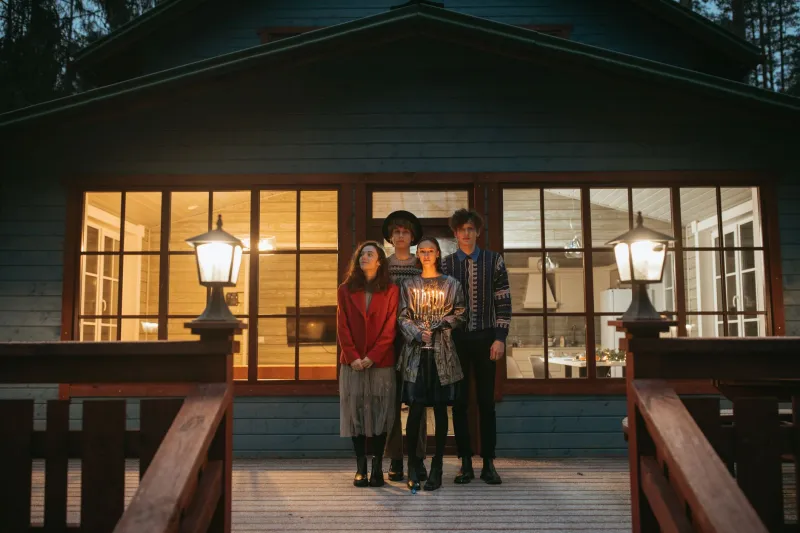
Somewhere around dusk, Ruby Hensley does something her neighbors haven't done in years. She turns off the porch light.
Not because the bulb burned out. Not because she forgot. She does it on purpose, same as her mother did, same as her grandmother did before that. She pulls a chair to the edge of the boards, sets a mason jar of sweet tea on the rail, and she waits for her eyes to adjust.
"People think darkness is something to fix," she says, looking out over the hollow below her house in Yancey County, North Carolina. "But it's not broken. It's just dark. And once you stop fighting it, you start to hear everything."
Ruby is seventy-one. She's been sitting on this porch after nightfall for most of her life. And she's not alone — though she'd be the first to admit the tradition is getting harder to find.
A Habit Born From Necessity
Before air conditioning made the indoors tolerable in summer, before television gave families a reason to face the wall instead of the yard, the porch was the living room that actually got used. Families in Southern Appalachia spent their evenings outside not because it was romantic, but because it was practical. The air moved out there. The heat eased. The bugs were manageable if you kept the smoke going.
But something else happened out on those porches too — something that wasn't strictly practical at all. People learned to read the land by night.
They tracked which direction the whippoorwills were calling from, because their grandparents swore it told you something about the weather turning. They listened for the creek to sound different after rain higher up the mountain. They watched the tree line for the movement of deer coming down to the lower pasture, and they noticed when the foxes stopped showing up.
"My daddy could tell you what time it was within fifteen minutes just by where the stars were sitting," says James Tipton, sixty-three, whose family has farmed the same ridge in Unicoi County, Tennessee for four generations. "He didn't need a watch. He'd been watching that sky his whole life."
James still sits out most nights between April and October. His wife, Donna, brings out a quilt around nine. Their adult daughter, Shea, has started joining them since she moved back from Asheville two years ago — and she admits it took her a while to stop reaching for her phone.
"The first few nights I felt like I was going crazy," Shea says, laughing. "I didn't know what to do with myself. But then something shifted. I started actually hearing things. Like, really hearing them. And I realized I'd been missing all of it."
What the Dark Teaches
There's a kind of literacy that comes from spending time in the dark that you can't get any other way. Ruby calls it "night sense" — the slow accumulation of knowing what belongs out there and what doesn't.
She can tell a barred owl from a great horned owl without looking up. She knows the difference between a raccoon moving through the brush and a possum doing the same. She's watched enough summers go by to know that when the katydids get loud earlier than usual, fall is coming fast.
This isn't folklore for its own sake. It's observational knowledge built over decades of simply being present. And it's the kind of thing that evaporates fast when a family stops going outside.
"My grandchildren, they don't know what a whippoorwill sounds like," Ruby says, and there's no judgment in her voice — just something quiet and a little sad. "They've never sat out long enough to hear one. That's not their fault. Nobody showed them how."
The showing-how part matters. Porch-sitting in the old Appalachian tradition wasn't a solo activity. It was communal, and it was intergenerational. Grandparents named things. Parents explained things. Children absorbed things they didn't even know they were learning. That's how the knowledge moved — not through books, but through hours spent side by side in the cooling air.
Resistance in a Rocking Chair
Ask around in the hollers and ridge communities of Southern Appalachia and you'll find that the families who still practice this aren't doing it out of nostalgia alone. There's a quiet defiance in it.
"Every single thing about modern life is designed to pull you inside," says Donna Tipton, straightening the quilt across her lap. "The streaming services, the social media, the news. It never stops. And sitting out here — it's like saying, no. Not tonight. Tonight I'm going to watch my mountain instead."
That's a form of resistance that doesn't require a manifesto or a movement. It just requires pulling a chair outside and staying put.
For some families, it's also become a way of holding onto each other. James talks about how his father used to tell stories on the porch that never came up inside the house — old stories about the land, about people who'd lived there before, about hard winters and strange sightings and neighbors long gone. The dark seemed to loosen something in him.
"The porch was where the real talking happened," James says. "Inside, everybody's doing something. Out here, you're just... being. And somehow that made it easier to say things."
The Porch as a Portal
There's a reason the whippoorwill — that elusive, nocturnal bird that inspired this very website — feels so tied to the idea of the Appalachian porch. For generations, hearing a whippoorwill call was a porch experience. You didn't go looking for them. You sat still, you waited, and if you were lucky and the night was right, the sound came to you.
That's the whole philosophy of it, really. The porch isn't a place you go to do something. It's a place you go to receive something — the sounds, the smells, the slow revelation of a mountain night doing what it's always done, whether or not anyone's watching.
Ruby puts it simply: "The mountain doesn't care if you're out here or not. But you'll care that you were."
She refills her mason jar and leans back in the chair that belonged to her mother. Down in the hollow, something moves through the leaves. She tilts her head, listens, and smiles.
She knows exactly what it is.
And she didn't need a light to figure it out.