Shifting Shadows: How Appalachia's Top Predators Are Rewriting the Rules of the Hunt
There's a particular kind of quiet that settles over a mountain hollow around three in the morning. Not peaceful quiet — watchful quiet. The kind that makes the hair on your arms stand up even when you can't say why. Old-timers around here will tell you that feeling means something is out there sizing you up before you ever knew it was close.
But lately, that feeling is showing up at the wrong hours. Deer hunters are catching bobcats on trail cameras at high noon. Bear sightings are clustering around dusk instead of well after dark. Coyotes are howling at four in the afternoon like they forgot the sun was still up. Something is shifting in the rhythm of the Southern Appalachian forest, and the people who know these mountains best — the biologists, the wardens, the hunters who've been reading sign since before they could drive — are starting to compare notes.
The Animals Haven't Changed. Everything Around Them Has.
Dr. Meredith Calloway, a wildlife ecologist who's spent the better part of fifteen years tracking carnivore movement across Western North Carolina and East Tennessee, puts it plainly: "These animals are not doing anything random. They are incredibly adaptive, and what we're watching is adaptation happening faster than most people expected."
Her research, which uses GPS collar data and remote camera networks spread across several mountain counties, shows that black bears in heavily recreated areas have quietly nudged their core activity window later into the night over the past decade. Where a bear might once have been reliably active from around nine in the evening through early morning, some individuals in high-traffic zones are now compressing most of their movement into a narrow band between midnight and four a.m.
The driver isn't hard to find. Trail use has exploded across Southern Appalachia. Greenways, backcountry routes, and popular overlooks that once saw a few dozen visitors on a summer weekend now draw hundreds. The bears haven't gone anywhere. They've just gotten more particular about when they show up.
Bobcats Are Playing a Different Game
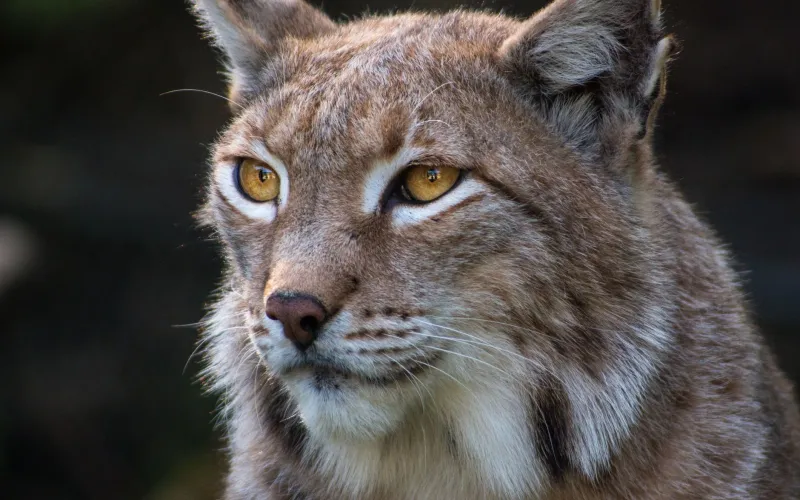
If bears are shifting deeper into the night, bobcats are doing something almost counterintuitive. Several wildlife biologists working across the region have flagged an uptick in midday bobcat activity, particularly in areas where coyote populations have grown dense.
Game warden Holt Pemberton, who covers a wide swath of mountain terrain in Southwest Virginia, has been watching this play out on his own camera setups for the past three seasons. "I've got a stretch of ridge where I used to expect bobcats right around first light or last light — textbook crepuscular behavior," he says. "Now I'm pulling cards and finding them moving at ten, eleven in the morning. That's not normal, and I don't think it's coincidence that coyote activity in that same area is highest right after dark."
The theory, which Calloway and others have been exploring, is that bobcats may be shifting toward daylight hours partly to avoid competitive pressure from coyotes, which have firmly established themselves as a dominant nighttime presence across much of Appalachia over the last two decades. It's called temporal niche partitioning — different predators carving out different slices of the clock to reduce conflict — and it appears to be happening in real time across these mountains.
Coyotes: The Variable That Changed Everything
You can't have a conversation about changing predator behavior in Southern Appalachia without talking about coyotes. They weren't here in any meaningful numbers fifty years ago. Now they're everywhere, from the deep hollows to the edges of small towns, and their presence has introduced a competitive pressure that the ecosystem simply didn't have before.
Longtime hunter and naturalist Darcy Tipton, who grew up outside of Brevard, North Carolina, has been keeping a handwritten journal of animal observations for over thirty years. She'll tell you the coyote's arrival changed the math for every other predator in the mountains.
"When I was young, you could almost set your watch by the fox," she says. "Now the fox is mostly a daytime animal in a lot of places, and I think the bobcat is heading the same direction in spots. The coyote owns the night in a way nothing else did before."
Coyotes themselves are showing flexibility too. In areas close to human development, their activity patterns have become harder to predict — some packs leaning heavily nocturnal, others growing bolder during daylight as they lose their wariness of people over generations.
Climate Is Quietly Rewriting the Calendar
Beyond competition and human pressure, there's another force at work: a warming climate is stretching seasons in ways that ripple all the way up the food chain.
Warmer fall temperatures mean the mast crop — the acorns, beechnuts, and wild berries that black bears depend on for their pre-denning hyperphagia — is shifting. Bears that once began their intensive feeding push in late September are sometimes pushing that window into October or even early November. That means more bear movement, later in the year, often overlapping with hunting season in ways that create new friction.
Calloway's data also suggests that some bears in lower-elevation Appalachian zones are denning for shorter periods, or in a few cases skipping true hibernation altogether during mild winters. An active bear in January is a bear that needs to eat, and a bear that needs to eat at an unusual time of year is going to be moving at unusual hours.
What the Mountains Are Telling Us
None of this means these animals are in crisis. Bobcats, black bears, and coyotes are all doing reasonably well across Southern Appalachia by most population measures. What's changing is the ancient choreography — the unwritten schedule that governed who moved where and when, worked out over thousands of years of coexistence.
That schedule is being edited. Not erased, but revised, chapter by chapter, in response to a landscape that is louder, warmer, and more crowded than it used to be.
Holt Pemberton thinks about it in practical terms. "For hunters and hikers both, you just can't assume the same rules apply that applied twenty years ago," he says. "These animals are smarter than people give them credit for. They figure things out. We're the ones still catching up."
Darcy Tipton frames it differently, the way someone will when they've spent decades sitting still enough to actually watch the mountains breathe. "The forest has always had its own clock," she says. "We didn't set it. We don't get to decide when it changes. We just get to pay attention — if we're willing."
Out here in these hills, paying attention has always been the first skill worth learning. The shadows are still shifting. The question is whether we're watching closely enough to understand what they're saying.