Owned by Darkness: The Secret Lives of Appalachia's Night Creatures
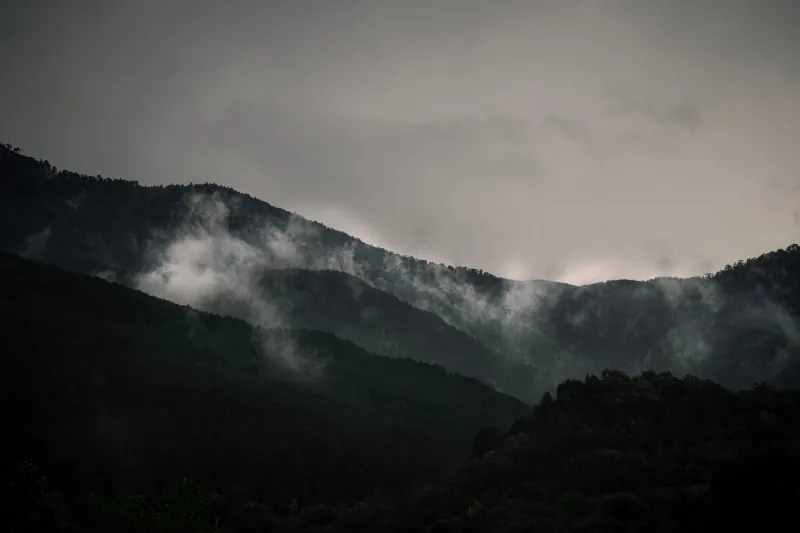
Most folks around here call it quits when the sun drops behind the ridge. Dishes done, porch swing stilled, maybe a window cracked to let the cool air in. But step outside around midnight and really listen — not just for the whippoorwills, though they'll be singing — and you'll start to understand that the mountains don't rest. They just change shifts.
Nocturnal wildlife in the Southern Appalachians doesn't get nearly the attention it deserves. We talk plenty about white-tailed deer at dusk, red-tailed hawks circling midday thermals, and the occasional black bear spotted near a campground. But the hours between ten at night and five in the morning? That's when the mountains are genuinely running at full capacity, staffed by a cast of creatures most of us have never properly met.
The Gliders Nobody Talks About
Start with the one that surprises people most: the northern flying squirrel. These aren't the gray squirrels raiding your bird feeder. They're smaller, softer, with enormous dark eyes built for low light and a loose fold of skin — called a patagium — that stretches from wrist to ankle and lets them sail between trees like tiny, fur-covered kites.
In the high-elevation spruce-fir forests of the Southern Appalachians, northern flying squirrels occupy a pretty specific ecological niche. They depend heavily on underground fungi — truffles and their relatives — which they find by smell and dig up with their front paws. Those fungi, in turn, are connected to the root systems of old trees through underground fungal networks. The squirrel eats, moves on, and deposits spores in its droppings. It's a whole underground economy, and the flying squirrel is the courier.
You're unlikely to spot one without trying, but if you sit quietly under a big hemlock or yellow birch on a moonlit night, you might catch a shadow gliding between canopy gaps — soundless, purposeful, gone before you can blink.
The Barn Owl's Hunting Ground
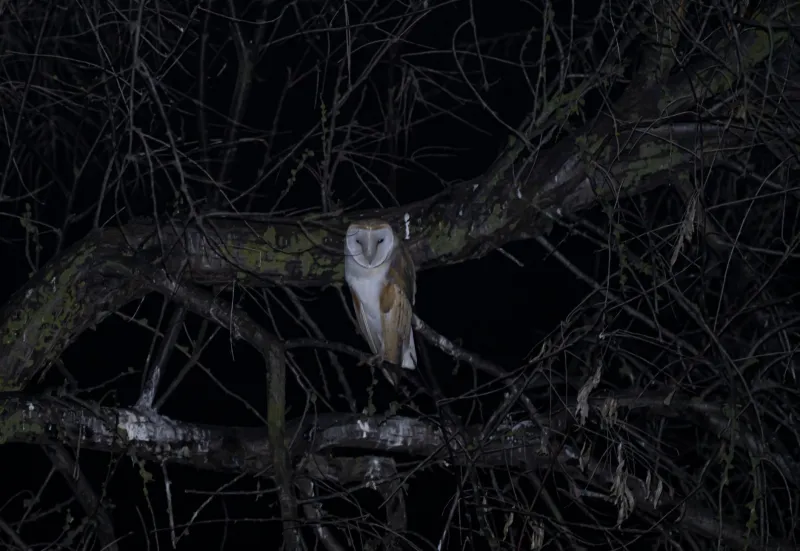
Down in the valleys and along the open pastureland that fringes mountain communities, barn owls are running their own operation. With a heart-shaped face that works like a satellite dish — funneling sound toward their asymmetrically placed ears — barn owls can pinpoint a field mouse moving through grass in total darkness. Not dim light. Total darkness.
They hunt low and slow, quartering back and forth across open ground with a buoyancy that looks almost effortless. When they lock onto something, the drop is fast and precise. A barn owl can take several small mammals in a single night, which makes them invaluable to the farmers and smallholders who share their territory, even if those folks never see one.
Barn owl populations have taken hits across parts of their range due to habitat loss and rodenticide use — poisons set for mice and rats that work their way up the food chain. In Appalachia, where old barns and open meadows still exist in reasonable numbers, they're holding on. But holding on isn't the same as thriving, and that distinction matters.
Bears Don't Sleep Through the Night
Here's something that tends to catch people off guard: black bears are not strictly nocturnal, but they've become increasingly so in areas where human activity is heaviest during daylight hours. In remote hollows and deep national forest land, bears move whenever they feel like it. Closer to roads, trailheads, and communities, they've learned to do their business after dark.
In summer and early fall, a black bear's whole existence revolves around hyperphagia — the biological drive to eat as much as possible before denning. A bear in this state can consume 20,000 calories a day, which means it's moving almost constantly, covering miles of terrain in search of berries, mast, insects, and whatever else presents itself. Under a full moon in August, a big boar bear might travel eight or ten miles in a single night, working ridge after ridge with a focus that's almost single-minded.
What bears do at night — where they go, what they eat, how far they range — tells wildlife biologists a tremendous amount about the health and connectivity of mountain ecosystems. A bear that can move freely between ridges without crossing a highway or a clearcut is a sign that the landscape is still functioning the way it should.
Moths, Beetles, and the Smaller Night Shift
It's easy to focus on the charismatic stuff — owls, bears, gliding squirrels — and overlook the smaller workers that keep the whole system humming. Sphinx moths, some with wingspans rivaling small birds, hover over night-blooming flowers and serve as pollinators for plants that have evolved specifically to attract them. Luna moths, those impossibly pale green creatures that feel like they came from a dream, emerge in spring and early summer, living only long enough as adults to find a mate.
Long-horned beetles work the dead wood that flying squirrels and woodpeckers depend on later. Ground beetles cruise the forest floor, hunting smaller invertebrates with a single-mindedness that would impress any predator. These creatures don't make the highlight reel, but pull them out of the equation and the whole night shift starts falling apart.
Why It Matters That You Know This
There's a practical case for paying attention to nocturnal wildlife, and then there's a less tangible one that might actually be more important.
The practical case: nocturnal animals are sensitive indicators of ecosystem health. Flying squirrel populations reflect the condition of old-growth forest structure. Barn owls reflect the state of small mammal populations and the presence — or absence — of chemical contamination in the food web. Bear behavior reflects landscape connectivity. If you know what to look for, the night shift tells you whether the mountains are doing okay.
The less tangible case is harder to put into words, but people who've lived close to the land here understand it instinctively. There's something that shifts in you when you realize the mountains aren't waiting around for you to wake up. The ridge behind your house has a whole life that proceeds without your awareness or permission. The hollow you walk through every morning has been busy since you went to bed.
That's not a threatening idea. It's a humbling one. And in a culture that's historically understood itself as part of the land rather than apart from it, that kind of humility has always been a form of wisdom.
Getting to Know Your Night Neighbors
You don't need expensive equipment or a biology degree to start paying attention. A red-light headlamp — red light doesn't destroy your night vision the way white light does — and a willingness to sit still for thirty minutes in your backyard or on a back road will reveal more than you'd expect. Motion-activated trail cameras are another option, and people across the region have been genuinely surprised by what turns up on their memory cards come morning.
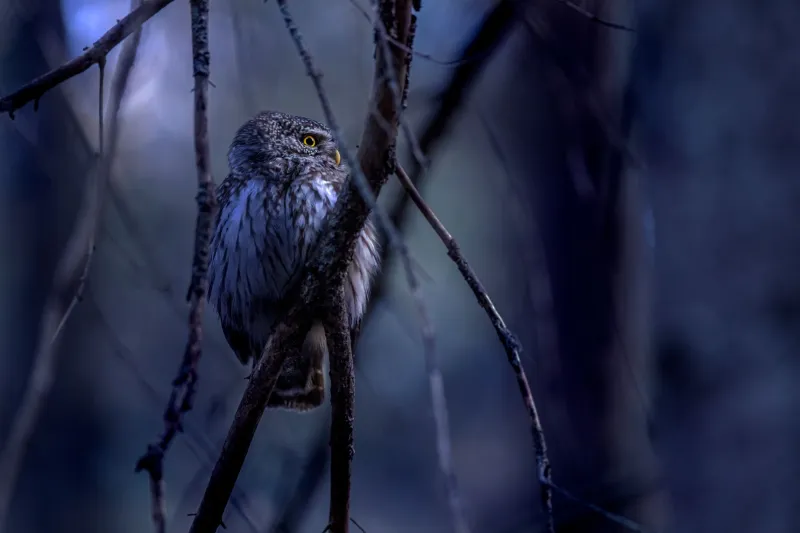
Learn the calls. The eastern screech-owl's descending whinny. The barred owl's who-cooks-for-you. The great horned owl's deep, resonant hoot that seems to come from everywhere and nowhere. Once you can name the voices, the darkness starts to feel less like an absence and more like a conversation you've only just learned to hear.
The mountains have always been running this double life. It's just that most of us have been too busy sleeping to notice.