Darkness Reclaimed: What It Means When Appalachian Towns Stop Turning the Lights On
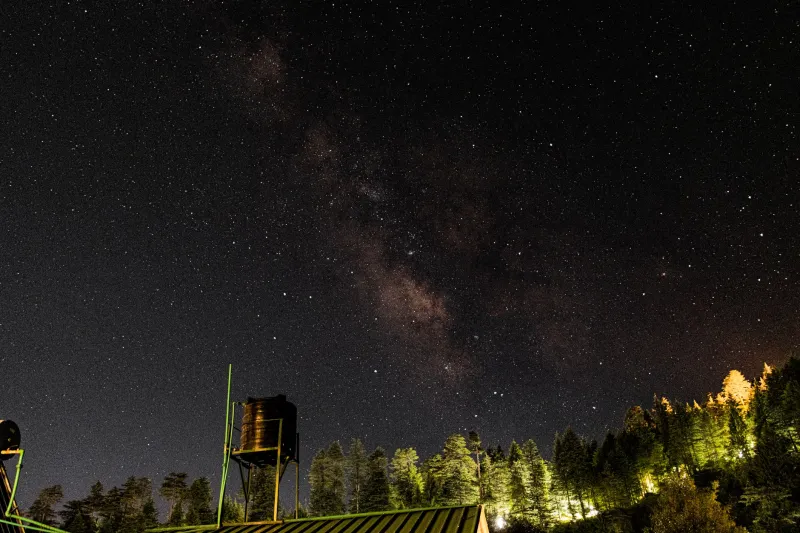
There used to be a hardware store on the main drag in Spruce Pine, North Carolina that kept its window display lit until well past ten o'clock. Nobody was shopping. The owner just liked the idea that someone walking home late might feel less alone for it. That store's been closed eleven years now. The window's dark. And if you stand on that sidewalk on a clear October night, you can see more stars than most people in Charlotte will ever lay eyes on.
That's the strange bargain Southern Appalachia is making with itself right now. As towns thin out—as storefronts shutter, as the last of the working-age population drifts toward Asheville or Knoxville or somewhere with a hospital that's still open—the artificial light that once defined community life is retreating. And in its place, something older is moving back in.
The Slow Dimming
This isn't a dramatic event. Nobody throws a switch. It happens the way most things happen in the mountains—gradually, quietly, until one day you look around and realize the landscape has changed without anyone calling a meeting about it.
Rural electric cooperatives across the region have been quietly decommissioning streetlights in low-traffic areas for over a decade. Maintenance costs money. Replacement parts for older sodium-vapor fixtures are getting harder to source. And when a town's population drops below a certain threshold, the math stops working in favor of keeping the lights on all night.
In Buchanan County, Virginia—one of the most sparsely populated counties east of the Mississippi—county records show a 40 percent reduction in active public streetlights since 2005. Similar patterns show up in McDowell County, West Virginia, in Breathitt County, Kentucky, and in scattered pockets of Tennessee's upper Cumberland Plateau. These aren't places that made headlines when the lights started going out. They rarely make headlines for anything.
"When I was a girl, you could walk downtown on a Friday night and it felt like somewhere," says Della Combs, 74, who has lived her entire life in a small coal-country community in eastern Kentucky. "The diner was lit, the pharmacy was lit, the barbershop had that spinning pole going. Now I drive through at nine o'clock and I can't hardly tell if the road's still paved."
What the Ecologists Are Noticing
Here's where the story gets complicated in a way that nobody planned for.
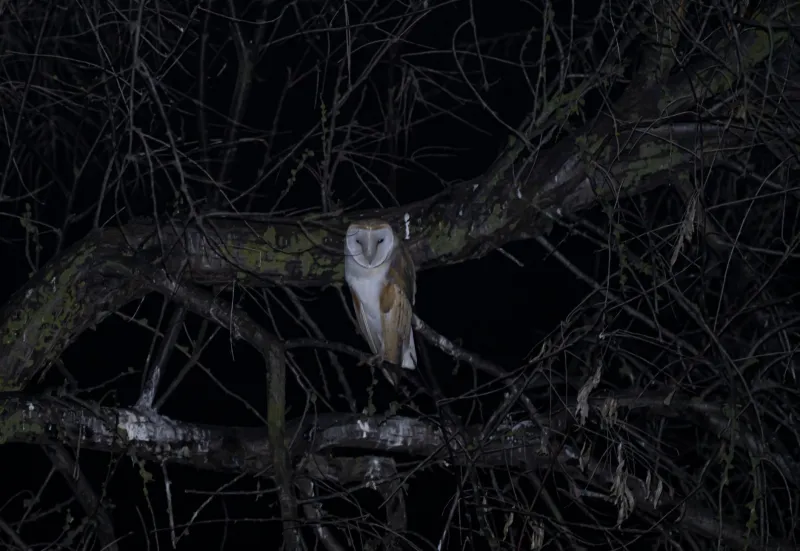
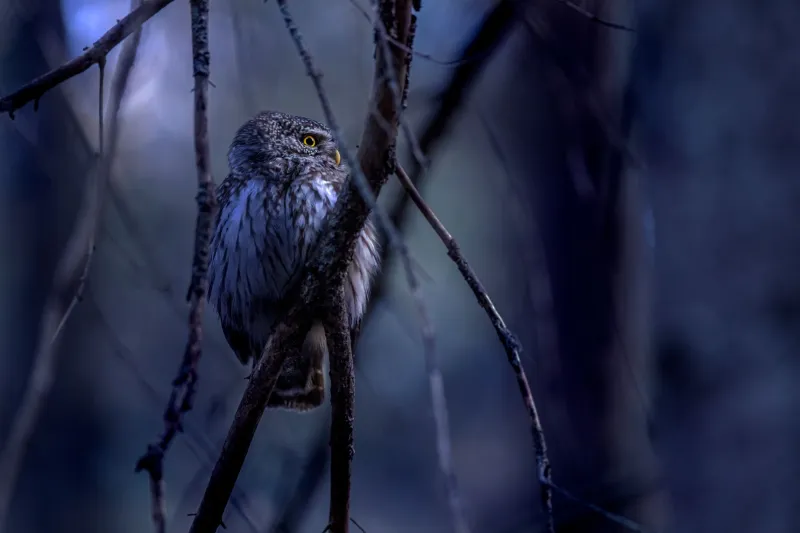
Light pollution is one of the most underreported ecological threats in the Eastern United States. Artificial light at night disrupts insect navigation, throws off migratory bird patterns, interferes with the hunting behavior of owls and bats, and—perhaps most significantly for the Appalachian ecosystem—degrades the conditions that fireflies, luna moths, and dozens of other light-sensitive species need to survive and reproduce.
Dr. Renata Voss, a wildlife ecologist who has spent the last six years studying nocturnal species distribution across the Southern Blue Ridge, puts it plainly: "The places where human populations are declining are, almost incidentally, becoming some of the best nocturnal wildlife habitat in the eastern half of the country. It's not a policy decision. It's just what happens when people leave and take their lights with them."
Satellite imagery from NASA's Black Marble dataset—which maps nighttime light emissions globally—shows visible darkening across rural Appalachian counties over the past fifteen years. Researchers studying that data have noted corresponding upticks in bat activity surveys, owl territory mapping, and moth diversity counts in the same areas. The mountains are getting their nights back, even if the reason why carries a human cost that nobody's celebrating.
The Memory of a Lit-Up Place
Town historians in the region tend to hold the two realities at the same time without much trouble. They've had practice.
"We lost the sawmill, then we lost the mine, then we lost the school consolidation fight, then we lost the grocery," says Harold Bentley, 81, unofficial keeper of institutional memory for a small Mitchell County community. "Losing the streetlights is just another thing on the list. But I'll tell you, there's nights now where I sit on the porch and look up and I think—well, at least we got that back. The sky. Nobody took that."
That sentiment shows up again and again in conversations with longtime residents. Not resignation, exactly. More like a mountain person's instinct for finding what's still there after everything else has been stripped away.
The dark, it turns out, has always been part of Appalachian life. The electric light was the interruption—a roughly hundred-year experiment in pushing back against the night that the mountains are now slowly reversing on their own terms.
What Gets Lost in the Dark
But let's not romanticize this past the point of honesty.
Darkness has a social cost that wildlife biologists don't have to worry about. Unlit streets feel unsafe, particularly for elderly residents and for women walking alone. Businesses that might otherwise stay open later don't, because a dark streetscape signals that nobody's around. Tourism—which many of these communities are counting on to replace extraction-economy jobs—is harder to build when your downtown looks abandoned after eight p.m.
Some towns are trying to thread that needle with targeted, lower-impact lighting. Warm-spectrum LED fixtures mounted lower to the ground, pointed downward rather than skyward, can preserve some sense of human presence without blasting the kind of blue-white light that scrambles insect navigation and washes out the stars. A handful of Appalachian communities have started exploring dark-sky certification through the International Dark-Sky Association, which requires specific lighting standards but opens doors to astrotourism—a niche but growing market.
"People drive four hours to stand in a field and see the Milky Way," says one county economic development coordinator who asked not to be named because the program is still in early stages. "We've had that for free our whole lives and never thought to charge admission."
The Night as Inheritance
There's something worth sitting with in all of this. Southern Appalachia has spent the better part of two centuries being told that its value lies in what can be extracted from it—coal, timber, natural gas, cheap labor. The darkness, the quiet, the ecological richness of its hollows and ridgelines—those things were treated as background noise, the stuff you endured between shifts.
Now, as the extraction economy winds down and the people who built their lives around it age out or move on, what's left behind is something the market is only beginning to figure out how to price: genuine, uncompromised night.
The whippoorwills are calling again in counties where they'd gone quiet for decades. The fireflies are thicker in the coves below the old mine sites. The Milky Way arches over main streets where hardware stores once kept their windows lit out of nothing more than neighborly kindness.
Whether any of that is enough to hold a community together is a different question—and a harder one. But the mountains have always kept their own accounting. They'll be here long after we've figured out what to do with the dark they've given back to us.