Bigger Voice, Different Hollow: Getting to Know the Chuck-Will's-Widow
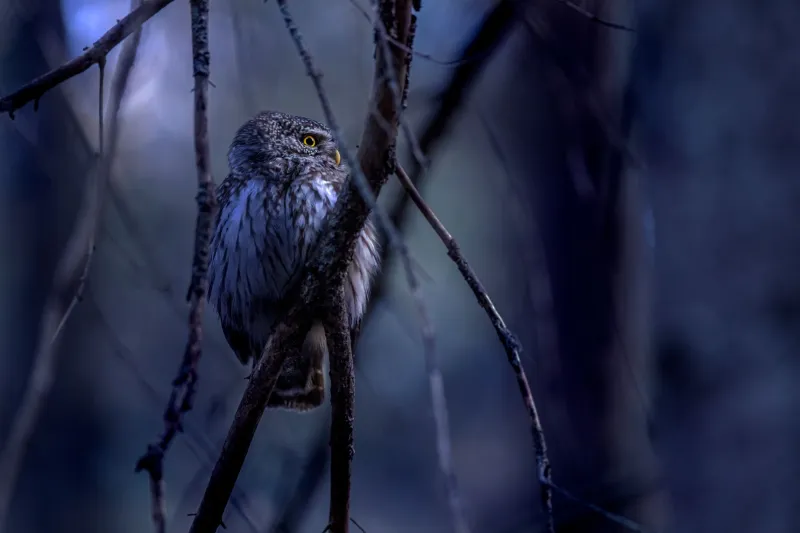
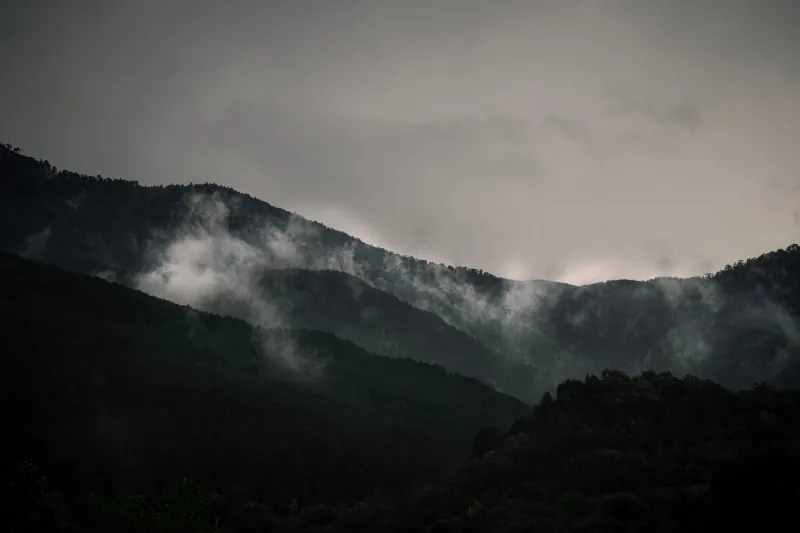
There's a moment that happens every spring in the lower hollows of the Southern Appalachians — somewhere around dusk, when the light goes purple and the last robin quits singing — when the night birds clock in. If you're deep enough into the Georgia Blue Ridge or the ridges of western North Carolina's southern counties, what you might hear isn't the whippoorwill you were expecting. It's something heavier. A voice that seems to come up from the chest of the mountain itself.
Chuck-will's-widow. Chuck-will's-widow.
Say it out loud a few times. It's slower than a whippoorwill's call, more deliberate, like someone who's got all night and knows it.
For a lot of Appalachian folks, this bird is basically a rumor — something that belongs to the flatwoods and the coastal plain, not the mountains. But that understanding is getting complicated, and the naturalists paying attention say the story the chuck-will's-widow is telling right now might be one of the more important ones coming out of these hills.
Meet the Bigger Bird
The chuck-will's-widow (Antrostomus carolinensis) is the largest nightjar in North America. That alone should earn it more respect than it gets. Where a whippoorwill weighs in around two ounces, a chuck-will's-widow can push nearly four — a real bruiser by nightjar standards. The plumage runs toward warm, rusty browns and tawny buffs rather than the cooler grays of its cousin, a difference that makes sense when you consider it evolved in warmer, drier pine-oak woodlands rather than the damp cove forests the whippoorwill favors.
Both birds are members of the nightjar family, both are nocturnal insectivores, and both name themselves with their calls. But the ecological niches they carved out over thousands of years are meaningfully different. The whippoorwill is a bird of moist upland forests, of cool ridge-top air and dense leaf litter. The chuck-will's-widow prefers the open pine woods, the scrubby edges, the sandier and drier ground of the Piedmont and coastal South.
Or at least, that used to be the arrangement.
A Range That's Quietly Shifting
Ask David Simmons, a field naturalist who's been running bird surveys in the southern Appalachian foothills for going on fifteen years, and he'll tell you the lines are blurring.
"Ten years ago, if somebody reported a chuck-will's-widow up above 2,500 feet in western Carolina, you double-checked the ID," he says. "Now I'm getting credible reports from elevations that would've seemed surprising not long ago. It's not dramatic. It's a slow creep, but it's real."
The drivers behind that creep aren't mysterious, even if the full picture is still being sorted out. Warmer average temperatures across the region are nudging the comfort zones of heat-tolerant species northward and upward. Simultaneously, changes in forest composition — more open, disturbed land from development pressure, timber harvesting, and the ongoing loss of eastern hemlock to the woolly adelgid — are creating habitat edges that suit the chuck-will's-widow better than the dense, closed-canopy forests it historically avoided.
In plain terms: as parts of the Appalachian landscape start to look and feel a little more like the Piedmont, Piedmont birds are showing up.
What It Means for the Whippoorwill
This is where things get ecologically interesting — and a little uncomfortable. The whippoorwill, as readers of this site know well, is already dealing with its own pressures. Insect declines, habitat fragmentation, and light pollution have been hammering its populations across much of its range. Now, in the southern reaches of Appalachia, it may be facing something else: a competitor moving into its living room.
Nightjars aren't typically known for aggressive territorial behavior between species, but resource overlap is resource overlap. Both birds hunt flying insects at night, both nest on the ground in leaf litter, and both need quiet, dark forest edges to do their thing. When two species with similar needs start occupying the same hollows, something eventually gives.
"We don't have great data yet on how they're actually interacting," Simmons admits. "But it's a question worth asking. If the chuck-will's-widow is moving into traditional whippoorwill habitat, and whippoorwill numbers are already stressed, that's a pressure we should be tracking."
The Locals Who Already Knew
Here's the thing about scientific range maps: they're always a little behind the people who actually live in a place. Talk to old-timers in the foothill counties of Georgia and Alabama, or the lower ridges of Tennessee's Cherokee National Forest, and plenty of them will tell you they've been hearing the chuck-will's-widow their whole lives — they just didn't always know what to call it.
"My grandmother called it the 'big nighthawk,'" says one woman from a small community outside of Murphy, North Carolina. "She said it showed up in the warm years and quieted down in the cool ones. We never thought much of it. It was just part of summer."
That kind of long-baseline folk observation is exactly what formal monitoring programs often miss. A bird that's been present but undercounted in the southern Appalachian fringe for generations looks, on paper, like a sudden arrival. It may be less a new colonization than a long-simmering presence finally becoming impossible to ignore.
How to Find One Yourself
If you want to hear a chuck-will's-widow for yourself, the southern end of the Appalachian chain is your best bet — think the ridges and foothills of northern Georgia, far western South Carolina, and the lower elevations of southwestern North Carolina. Late April through July is prime time, starting about twenty minutes after full dark.
The call is unmistakable once you know it. It's deeper and more rolling than the whippoorwill's sharp whistle, with that first "chuck" note often audible at close range but swallowed by distance. Some people describe it as almost froglike in its rhythm. Others say it sounds like someone slowly reading their own name off a grave marker.
You won't see it. Almost nobody does. Like all nightjars, the chuck-will's-widow is a master of stillness and camouflage, and it spends its days pressed flat against a log or a patch of dead leaves, invisible in plain sight.
But you'll hear it. And once you do, you'll understand why the people who grew up with this bird in their hollow never quite needed a field guide to know it mattered.
A Bird Worth Watching
The chuck-will's-widow doesn't have the cultural weight of the whippoorwill in Appalachian tradition — not yet, maybe not ever. It's always been more of a lowland and coastal bird in the regional imagination, tied to Spanish moss and longleaf pine rather than laurel thickets and rhododendron tunnels.
But the mountains are changing, and the birds are changing with them. Paying attention to which species are showing up where, and why, is one of the more honest ways we have of reading what's actually happening to this landscape we love.
The chuck-will's-widow is talking. It's worth learning to listen.