Planted by the Dead, Tended by the Living: Appalachia's Heirloom Seed Keepers
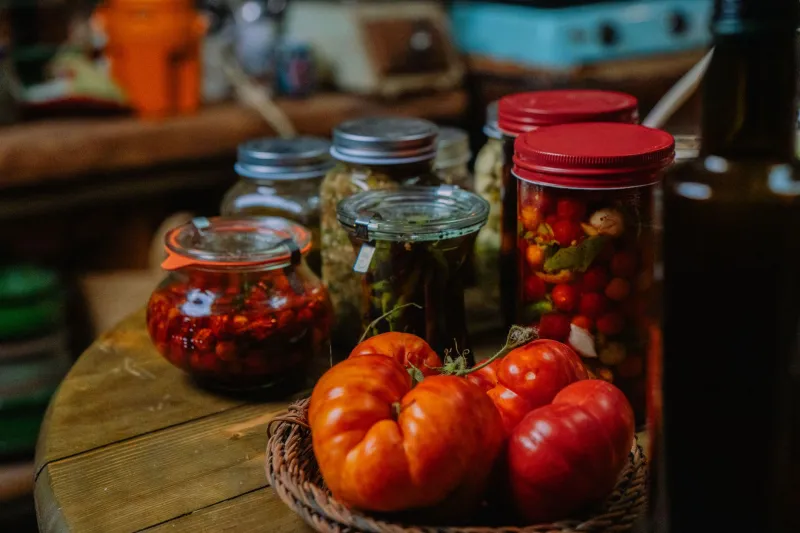
Ruby Hensley keeps her most important seeds in a Mason jar on the second shelf of a pine cabinet her grandfather built sometime before the Second World War. The jar holds maybe two dozen dried beans — flat, speckled things the color of a creek stone — and she handles them the way some people handle old photographs. Carefully. With a kind of reverence that doesn't need explaining if you grew up here.
"My grandmother called them Greasy Cutshorts," Ruby says, setting the jar on her kitchen table in Letcher County, Kentucky. "Her grandmother grew them. Before that, I couldn't tell you. But they've never left this family."
That jar represents something you won't find in a grocery store, a seed catalog, or a university extension office database. It represents continuity — the stubborn, quiet insistence of mountain people that what their people grew still matters, still feeds, still means something.
Seeds as Inheritance
Across the Southern Appalachians, from the ridges of western North Carolina to the creek hollows of eastern Tennessee and the coalfield counties of southwestern Virginia, a loose, largely informal network of gardeners is doing something that looks simple from the outside: growing old vegetables and saving their seeds at the end of every season. But call it simple and you'll miss the point entirely.
These seeds carry genealogy. When a family in Swain County, North Carolina plants a half-runner bean variety that arrived with a German immigrant ancestor in the 1790s, they're not just putting food on the table. They're maintaining a biological thread that connects the present to a specific past — a specific person, a specific journey, a specific act of survival.
"People talk about heirlooms like they're antiques," says David Burchfield, a retired schoolteacher who tends a large kitchen garden outside Burnsville, North Carolina. "But antiques just sit there. These seeds are alive. They're doing something every single year. You're in a relationship with them."
David grows a tomato his great-aunt called a "German Johnson" — a big, meaty, pink-shouldered variety that commercial growers abandoned decades ago because it doesn't ship well. It bruises too easily, splits in a hard rain, and looks nothing like the uniform red spheres that fill supermarket bins. It also, by most accounts, tastes like what a tomato is supposed to taste like.
"She'd bring starts to church every spring," he says. "Wrapped in newspaper. People would pass them down the pew. That's how seeds moved around up here. That's still how they move around."
What the Catalogs Don't Carry
Commercial agriculture in the twentieth century quietly erased an enormous amount of regional food diversity. Varieties that didn't yield high enough, couldn't be mechanically harvested, or didn't hold up during long-distance shipping simply stopped being grown at scale. Many disappeared entirely. But not all of them.
In Appalachia, where small-scale subsistence gardening persisted long after it faded elsewhere, families kept growing what they'd always grown — often without any particular awareness that they were doing something historically significant. They were just gardening the way their people had always gardened.
The result is a kind of living seed library scattered across thousands of private gardens, smokehouses, and kitchen shelves. Varieties with names like Mortgage Lifter, Turkey Craw, Bloody Butcher, October Bean, and Candy Roaster — many of them unknown outside a specific county, sometimes unknown outside a specific family — have survived here simply because somebody kept planting them.
Laura Jean Combs, who gardens on a steep hillside plot in Wise County, Virginia, grows a white corn variety she knows only as "Mamaw's corn." She doesn't know its official name, if it ever had one. She knows it makes the best cornbread she's ever eaten, that it requires a longer growing season than most modern hybrids, and that her grandmother saved it every year for as long as anyone in the family can remember.
"I tried to look it up once," she says, shelling dried ears at her kitchen table. "Couldn't find it anywhere. Far as I know, this corn only exists in this hollow. That's a little terrifying, if you think about it. And it's also kind of wonderful."
The Work of Keeping
Seed saving isn't passive. It requires attention, intention, and a willingness to organize your garden around the needs of the seeds rather than your own convenience. Cross-pollination is a constant concern — grow two varieties of the same species too close together and the seeds you save won't come true to type the following year. Some crops require isolation distances of a quarter mile or more to stay genetically pure.
"You have to think about what's blooming when," says Ruby Hensley. "You have to keep notes. You have to dry things properly or they'll mold. It's not hard, but it takes paying attention, and most people have stopped paying attention to their gardens like that."
Organizations like the Appalachian Seed Savers network and the broader Seed Savers Exchange have worked to document and preserve some of these varieties, but the real preservation happens at the individual level, in individual gardens, sustained by individual families who feel a specific obligation to specific seeds.
That obligation is often framed in explicitly relational terms. These aren't just old vegetables — they're the vegetables somebody loved, tended, and trusted you to carry forward.
"My mother handed me those bean seeds the year before she died," says Laura Jean. "She didn't make a big speech about it. She just handed me the envelope and said, 'Don't let these go.' I understood what she meant."
More Than Food
There's a food sovereignty dimension to all of this that doesn't go unmentioned in these conversations. In a region that has historically been economically marginalized, that has watched outside interests extract its timber, coal, and labor for generations, the ability to grow your own food — food that belongs entirely to your family, that nobody can patent or price out of reach — carries a particular weight.
"These seeds are ours," David Burchfield says plainly. "Nobody sold them to us. Nobody can take them away. That matters up here in ways people from somewhere else might not fully get."
It also matters in ways that go beyond economics, into something closer to identity. The land in Appalachia isn't just land — it's biography. The garden isn't just a garden — it's evidence of presence, of survival, of the specific people who worked this specific ground.
Ruby Hensley puts it as simply as anyone can. She picks up the Mason jar, holds it to the window light, watches the afternoon sun catch those speckled beans.
"Every spring I put these in the ground," she says. "Every fall I take some back out and put them in this jar. And every year I think about all the hands that did the same thing before me. That's not nothing. That's everything, really."
The garden feeds the living. But it remembers the dead. And in the mountains, that's always been part of what a garden is for.