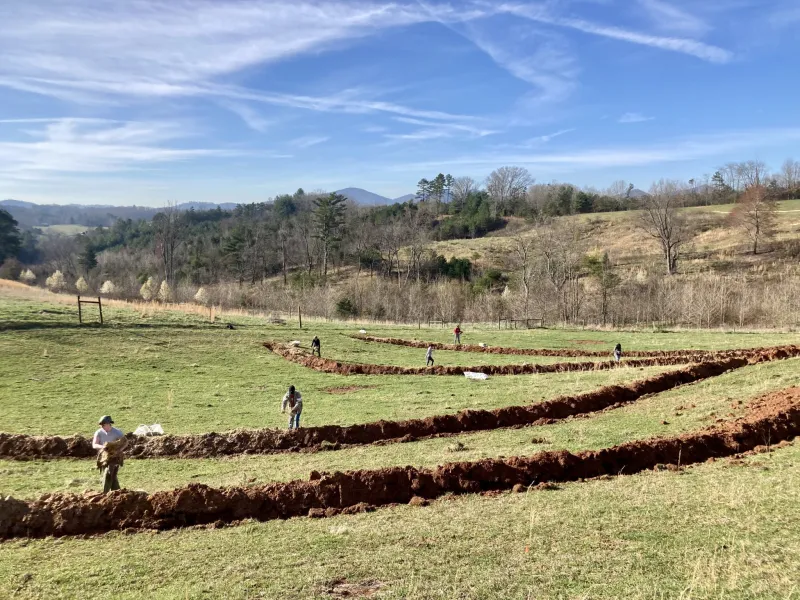
Fork in the Ground: Why Appalachian Water Witching Refuses to Be Explained Away
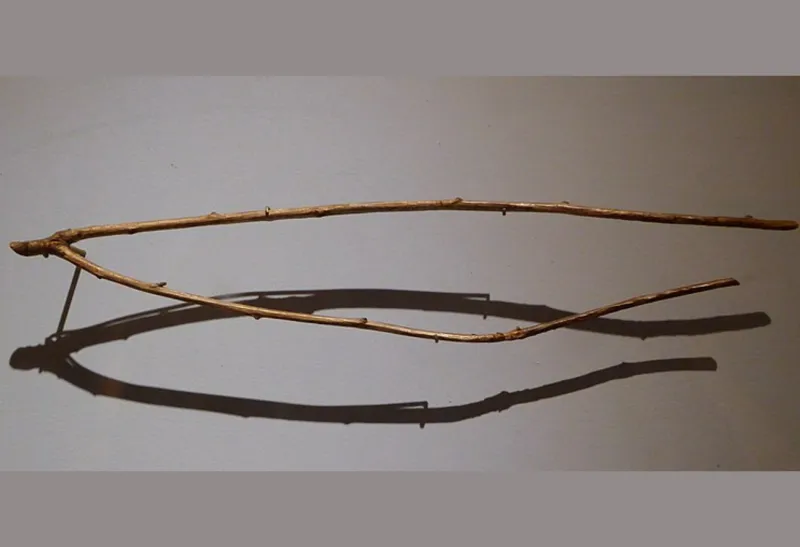
Photo: forked willow branch dowsing rod rural Appalachian farm field, via www.seescan.com
Roy Hensley doesn't have a business card. He doesn't advertise on Facebook, doesn't have a website, and wouldn't know what to do with a Yelp review. What he has is a reputation that stretches across three counties in southwestern Virginia, and a peach-wood fork he cut himself from a tree on his grandmother's property back in 1987.
He's a water witch. Or a dowser, if you prefer the less theatrical term. And in the rural hollows where he works, he's about as sought-after as a good mechanic.
"I've found water for maybe two hundred families over the years," he said, standing in a sloped pasture above a farmhouse outside Castlewood. "Not always where they expected it. Rarely where the county map said it ought to be."
He held the fork loosely, almost lazily, and walked a slow grid across the field. Within a few minutes, the tip pulled downward — not violently, but with a deliberate, unmistakable pressure. He marked the spot with a piece of orange tape.
"Right there," he said. "Twenty, maybe twenty-five feet down."
A Practice Older Than the State Lines
Dowsing — the practice of using a forked stick, bent wire, or other handheld instrument to locate underground water — has been documented in Europe since at least the fifteenth century. It arrived in Appalachia with the Scots-Irish and German settlers who moved into the mountain hollows in the eighteenth and nineteenth centuries, and it put down roots in the same soil as their homesteads.
In a region where surface water could be unreliable, seasonal, or easily contaminated, knowing where to sink a well wasn't a matter of curiosity. It was survival. And the knowledge of how to find water — passed from parent to child, neighbor to neighbor — became part of the cultural fabric of mountain life in the same way that knowledge of medicinal plants or weather signs did.
The tools vary by practitioner. Some use the classic forked branch — peach, willow, and witch hazel are traditional favorites. Others work with a pair of bent copper rods held loosely in the fists, watching for them to swing inward or cross over a water source. A few use a pendulum, a weighted object on a string, swung over a map or the ground itself.
What they share is the conviction that something is happening — that the instrument is responding to something real, even if no one has satisfactorily explained what.
What the Science Says (and Doesn't Say)
Hydrologists are, on the whole, skeptical. Multiple controlled studies conducted over the past several decades — including a notable German study from the 1980s that tested nearly 500 dowsers across a range of conditions — have found that practitioners perform no better than chance when the location of water is unknown to them and carefully controlled.
"The geology of a place largely determines where groundwater is," said Dr. Patricia Younts, a hydrogeologist who has worked on water access issues across western North Carolina and eastern Tennessee. "In a region like the Southern Appalachians, where fractured bedrock creates complex aquifer systems, finding water by drilling is genuinely difficult. But the patterns aren't random — they follow fracture zones, topography, and recharge areas that can be mapped with modern tools."
Younts is careful not to be dismissive of the people who practice dowsing, even if she doesn't accept the mechanism.
"What I think is happening in a lot of cases is that experienced dowsers have accumulated a tremendous amount of practical knowledge about landscape," she said. "They're reading slope, vegetation, soil color, drainage patterns — all of it unconsciously. And they're often right, not because of the stick, but because of everything they've learned to see."
It's a generous interpretation. And it's one that some dowsers themselves find both flattering and slightly beside the point.
The Gift, or the Skill
Hensley has heard the unconscious-knowledge theory before. He doesn't reject it outright.
"Maybe some of it's that," he allowed. "Reading the land is real. My grandfather taught me to look at where the trees grow thickest, where the grass stays green in a dry August. That matters." He paused. "But I've also found water in places where none of that pointed anywhere. Found it under a bare ridge where a geologist told a family there was nothing. They drilled where I said. Hit water at eighteen feet."
The question of whether dowsing is a gift or a learned skill — or some combination of both — is one that practitioners themselves debate. Some families speak of the ability running in bloodlines, skipping generations or manifesting differently in different individuals. Others insist anyone can learn it with patience and a good teacher.
What's notable is that in rural Appalachian communities, the question of mechanism often matters less than the question of results. When a family is looking at the cost of a dry drill hole — which can run several thousand dollars and still leave them without water — the calculus around who to trust gets complicated fast.
"I've had people come to me after they paid for a survey and got nothing," Hensley said. "I don't say the survey was wrong. I say let me walk it too. Sometimes we end up in the same place. Sometimes we don't."
Water Access and What It Means Now
The stakes around water in Appalachia have shifted considerably in recent decades. Contamination from abandoned mine drainage, aging infrastructure in small municipalities, and the creeping effects of drought on shallow wells have made the question of where and how to find clean groundwater more pressing than at any point in living memory.
In that context, the persistence of dowsing isn't just a colorful cultural footnote. It's a symptom of something real: communities that have learned, over generations, not to fully trust outside systems to solve their most basic problems.
"People here have always had to figure things out themselves," said Darlene Combs, who runs a small homestead in Letcher County, Kentucky, and has had her land dowsed twice in the past decade. "That's not stubbornness. That's just how it is when you're a long way from anyone who's going to come fix it for you."
She found water both times where the dowser said she would.
Back in that Virginia pasture, Hensley picked up his orange tape and walked back toward the fence line. The property owner would call a well driller next week. In a few days, they'd know if he was right.
He wasn't worried.
"I've been wrong," he said matter-of-factly. "Not often, but it happens. The land doesn't always tell you the same story twice." He tucked the peach-wood fork under his arm like a walking stick. "But it's usually talking. You just have to get quiet enough to listen."