Ain't Gone, Just Bending: Why Appalachian Talk Carries What Plain English Drops

The first time Dr. Ellen Combs heard a student get laughed at for saying I been knowing her all my life, she was standing in a school hallway in Knoxville, Tennessee, watching a kid shrink into his jacket. The teacher who laughed didn't mean harm. She just heard a grammar error. Combs, a sociolinguist who has spent two decades studying Appalachian English, heard something entirely different.
"That construction — 'been knowing' — it's not wrong," she says. "It's doing something English doesn't normally let you do. It's saying the knowing has been continuous, deep, and long-standing. It's not just I know her. It's I have always known her and still do. Standard English needs a whole sentence to say what that kid said in three words."
That gap — between what gets corrected and what actually got said — is exactly what a growing number of linguists, educators, and Appalachian writers are trying to close.
The Dialect That Outlasted the Map
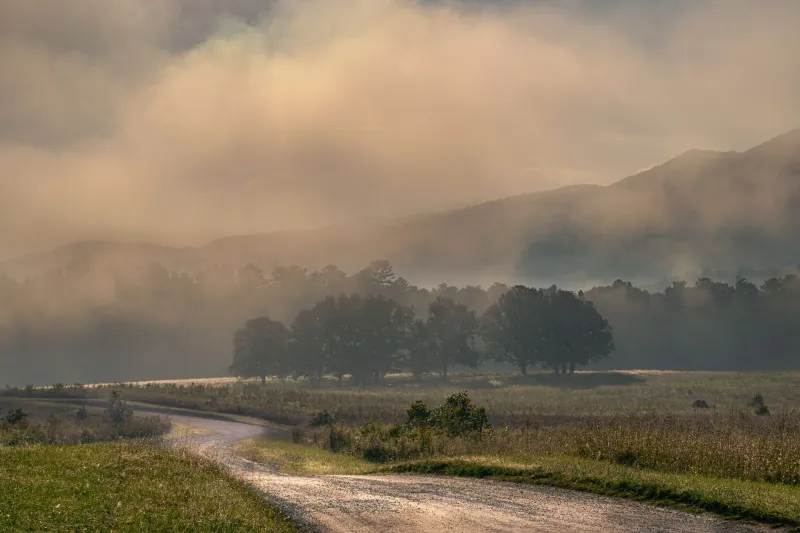
Appalachian English didn't develop in isolation by accident. The mountains themselves shaped it. Communities tucked into hollows and ridge lines had limited contact with the flattening forces of national media and interstate commerce that homogenized speech patterns across much of the country. What developed instead was a dialect with deep Scots-Irish roots, a handful of features that echo Elizabethan English, and a set of grammatical tools that evolved specifically to handle the kind of life people were living.
Time works differently in Appalachian speech. The "completive done" — as in She done told you — signals that something is finished, concluded, and you'd better accept it. The "double modal" construction, phrases like might could or used to could, expresses layers of possibility and past ability that standard English handles clumsily at best. You might could ask him isn't redundant. It's carefully calibrated — more tentative than you could ask him, more hopeful than you might ask him.
"These aren't corruptions," says Dr. Walt Wolfram, a North Carolina State University linguist who has studied Appalachian language patterns for decades. "They're innovations. They're solutions to communicative problems that other dialects never bothered to solve because the social context didn't demand it."
Kinship in the Verb Tense
Listen long enough to older speakers in places like Harlan County, Kentucky or Madison County, North Carolina, and you start to notice how much of the dialect is organized around relationship and belonging. The way people talk about land, for instance, isn't abstract. Someone doesn't say they live near a creek. They say the creek runs by the place — as if the water has agency, as if it chose to be there the same way the family did.
Mildred Hensley, 74, grew up in a holler outside of Spruce Pine, North Carolina, and still speaks in the cadences she was raised with. She doesn't think of her language as dialect. It's just how things are said.
"My grandmother would say the corn needs gathered or the beans need strung," she recalls, sitting on a porch that looks out over a ridge gone gold with October. "People always want to fix that. Say you have to put an ing on it. But what she was saying was that the corn has a need. The beans have a need. It's not just your job. It's a relationship."
That construction — the "needs" plus past participle form — is one of the most distinctive features of Appalachian English, and linguists note it carries a kind of moral weight that the standard form doesn't. The corn needs to be gathered puts the burden on the person. The corn needs gathered distributes it. The land and the person are in it together.
What Gets Lost in Correction
Schools have spent generations trying to sand these features away, and the damage has been quiet but real. Speakers who were made to feel ashamed of their home language often stopped using it in public, stopped passing it to their children, and slowly watched it fade into something they only brought out around family — if at all.
But the shame was never about grammar. It was about class, and about which communities got to define what correct looked like.
"Standard American English isn't linguistically superior," says Bethany Collins, a high school English teacher in Asheville who has incorporated dialect study into her curriculum. "It's just the dialect of people who had institutional power. Appalachian kids were told for a century that the way their grandparents talked was wrong. That message went a lot deeper than verb tenses."
Collins now teaches her students to think of themselves as bilingual — fluent in Appalachian English and in standard American English, able to move between them depending on context. The goal isn't to abandon one for the other. It's to stop treating one as a deficiency.
The response from students, she says, has been striking. "When I tell a kid that might could is a linguistic feature found in some of the oldest English dialects on earth, and that linguists find it fascinating — you watch something change in their face. They stop apologizing for how they talk."
A Language Shaped by Mountains
There's something worth sitting with in the idea that a dialect can be shaped by terrain. The compressed vowels, the particular music of Appalachian speech, the way certain words get stretched and others clipped — these aren't random. They're the accumulated result of people communicating across distances, over noise, through weather, in communities where you knew everyone and everyone knew you.
The word holler itself, meaning a small valley between ridges, tells you something. It sounds like what it is — a place where sound travels in specific ways, where you'd holler to be heard. The language is full of that kind of fit between word and world.
Nova Reid, a young writer from Wise County, Virginia, who publishes essays about Appalachian identity, says she spent years trying to scrub her speech patterns out of her writing before she realized she was scrubbing out the best parts.
"There's a word — airish — that means there's a chill in the air, a bite to it, but it's not cold exactly," she says. "It's that particular feeling of a September morning when summer's not quite gone. I have never found a word in standard English that does what airish does. When I stopped trying to translate and just used it, the writing got more honest."
Not a Museum Piece
The point isn't to freeze Appalachian speech in amber or treat it as a relic of a simpler time. Language lives because people use it, argue in it, love in it, make jokes in it. The Appalachian dialect is still doing all of those things — evolving, absorbing new influences, bending without breaking.
What linguists and native speakers alike want is for that evolution to happen on its own terms, without the old shame attached. For kids in mountain schools to learn that their grandmother's way of talking isn't something to outgrow. For the rest of the country to understand that what sounds like an error is often a precision that standard English hasn't figured out how to match.
As Dr. Combs puts it, leaning forward in her chair: "Every dialect is a way of being in the world. When we tell people their dialect is wrong, we're not just correcting their grammar. We're telling them their world is wrong. And that's a different thing entirely."
The mountains have been here longer than the correction. So has the language that grew up inside them.