Ears to the Ground: Appalachian Teens Are Recording Their Mountains Before the Sound Changes
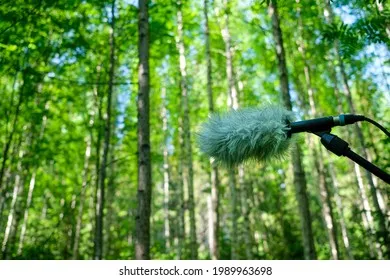
Photo: teenager recording nature sounds forest Appalachian mountains microphone, via www.shutterstock.com
It's 5:40 in the morning on a Thursday in late April, and seventeen-year-old Deja Whitfield is standing at the edge of a cove forest in Swain County, North Carolina, holding a directional microphone the size of a flashlight and trying not to breathe too loud.
She's been here since before first light. Her recorder — a used field unit she bought with birthday money and a small grant from a regional environmental organization — is logging everything: the wood thrush warming up in the canopy above her, the distant sound of Fontana Lake, a truck on the highway a mile and a half away. She'll go through the file later, tag the species calls, note the intrusions, and add it to a growing archive that she and a loose group of about a dozen other teenagers have been building for the past two years.
They call themselves the Holler Sound Project, though the name is informal and the membership is fluid. What they share is a belief — part intuition, part research, part genuine alarm — that their corner of the world sounds different than it used to, and that nobody is doing a very thorough job of writing it down.
"If you don't record it now," Deja says, lowering the mic for a moment, "you can't prove later that it changed."
Listening as a Survival Skill
The scientific field of soundscape ecology has been around since the 1970s, when composer and researcher Bernie Krause began documenting the acoustic environments of wild places and noticing how human activity was systematically degrading them. The basic idea is that a healthy ecosystem produces a layered, complex sound environment — what Krause called a "biophony" — and that when that complexity flattens out, something is wrong.
Most of that work happens in universities and research institutions. The Holler Sound Project is something different: a youth-driven, community-based effort to apply the same logic to a specific region, using affordable consumer equipment and a lot of early mornings.
The project started with a single teacher. Ramona Birdsong teaches environmental science at a small high school in Graham County. Two years ago, she assigned her students to make audio recordings of three different outdoor locations and compare them. What came back surprised her. Several students had independently noticed that a particular stretch of creek bottom they'd recorded sounded noticeably quieter than recordings their older siblings had made of the same spot for a similar assignment years earlier. A few of them wanted to know why.
"That question," Ramona says, "was the whole thing. I didn't have a good answer, and that bothered them. So we started actually trying to find one."
What the Recordings Reveal
The Holler Sound Project now has recordings from more than forty sites across three counties, logged at multiple times of day and across different seasons. The teens have documented the acoustic fingerprint of old-growth hemlock stands versus younger mixed forest. They've recorded the before-and-after of a logging operation on a ridge above one student's family property. They've captured the peculiar quiet that settles over a creek bottom after a flood, and the way sound returns — species by species, layer by layer — in the weeks that follow.
They've also documented things that are harder to categorize. The low, constant rumble of heavy equipment that carries for miles on still mornings. The way traffic noise from a widened highway has pushed into what used to be a reliably quiet dawn window. The absence of sounds — species that older community members remember hearing regularly but that don't show up in current recordings.
Eighteen-year-old Caleb Conseen, who grew up hunting and fishing in Cherokee County, has become the group's informal data analyst. He's built a simple spreadsheet system for tagging and comparing recordings, and he's started teaching himself basic spectrogram reading — a way of visualizing sound as a graph — to identify species calls more precisely.
"You can see on a spectrogram where the natural sound drops off and the machine sound takes over," he says. "It's not subtle. There's this shelf where the birds basically stop and the road noise starts. And that shelf is lower than it used to be. The road is winning more of the frequency space than it was."
Sound as Memory, Sound as Resistance
There's something that goes beyond ecology happening in this project, and the students are aware of it even if they don't always frame it in academic terms.
For communities in southern Appalachia, sound is tangled up with identity in ways that are hard to separate. The call of a whippoorwill after dark. The particular acoustics of a creek hollow in July. The sound of a community gathering — music, voices, the specific rhythm of a place that has been inhabited in a particular way for generations. When those sounds change or disappear, something cultural is lost alongside something ecological.
Deja talks about recording the sound of her grandmother's neighborhood in a small mountain town — the specific combination of a neighbor's wind chimes, a particular dog, the way sound bounces off the hillside behind the houses. "I wanted to have it," she says simply. "In case it changes. In case she moves. In case the neighborhood changes. I wanted proof that it sounded like that."
That impulse — to preserve sound as evidence, as testimony — is one of the more quietly radical things the Holler Sound Project is doing. In a region where outside interests have repeatedly moved in, extracted what they wanted, and moved on, leaving the landscape altered and the community to absorb the change, there's something pointed about a group of teenagers with microphones saying: we're paying attention. We're keeping records.
What Comes Next
The group has been in conversations with researchers at Western Carolina University about potentially integrating their recordings into a longer-term regional acoustic monitoring effort. A few of the students are hoping to present their findings at a state environmental conference this fall.
But Ramona Birdsong is careful not to let the formal recognition become the point. "The value isn't in whether a university validates it," she says. "The value is that these kids have learned to listen to where they live. That's not nothing. That might actually be everything."
On the ridge above the cove forest, Deja is packing up her gear as the light comes fully into the sky. The wood thrush is still going. Somewhere below, a vehicle is making its way up a gravel road, the sound carrying clean and clear in the morning air. She notes it in her log — time, location, source, duration — and adds it to the record.
The mountain keeps talking. Someone, finally, is writing it all down.
