When the Buzz Went Out of the Hollow: Appalachian Beekeepers on the Sound That's Going Missing
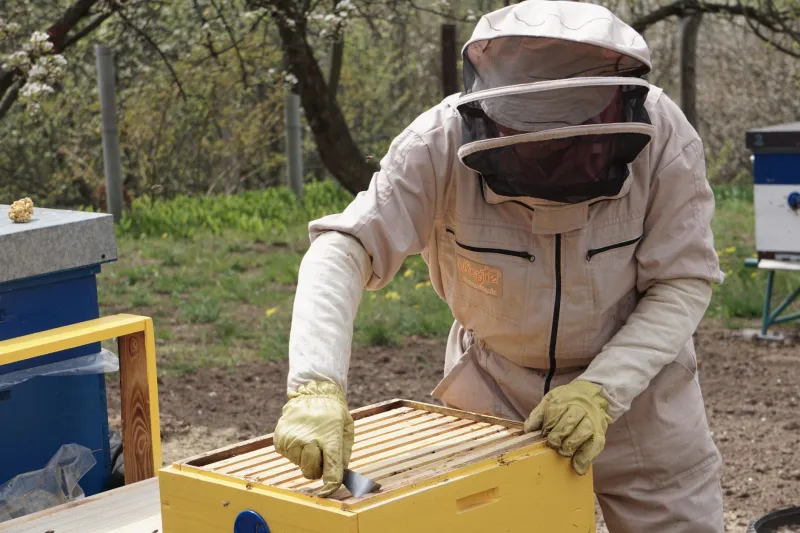
Walter Hensley can tell you exactly what a healthy orchard sounds like. He's been keeping bees in Watauga County, North Carolina, for going on forty-three years, and for most of that time, he didn't have to think much about the sound — it was just there, like the creek or the wind off the ridge. A thick, layered hum that started before sunrise and didn't let up until the light left the sky. Bees in the sourwood. Bees in the apple trees. Bees working the clover along the fence line until you almost had to raise your voice to talk over them.
"You didn't notice it until it wasn't there," he says, sitting on the tailgate of his truck at the edge of a small orchard that's been in his family since before he was born. "And then one spring it was just... quieter. And then quieter again. And now some mornings I walk out here and I can hear myself think, and that don't feel right at all."
He's not alone in noticing.
A Different Kind of Silence
Across the Southern Appalachian highlands — from the ridges of Southwest Virginia down through the Carolina mountains and into the hill country of North Georgia — beekeepers and small farmers are describing a shift that doesn't always show up in the data right away. Not a sudden crash, not a single bad season, but a slow draining of sound from places that used to vibrate with it. The pollinators are still out there, they'll tell you, but there are fewer of them, and the difference is something you feel more than you measure.
It's not just honeybees. The native pollinators — bumblebees, mason bees, sweat bees, the dozens of wild bee species that have worked these mountains since long before anyone thought to put them in a box — are part of what's disappearing. And unlike managed honeybee colonies, those wild populations don't have anyone checking on them, counting them, worrying over them through the winter.
"People focus on the honeybees because those are the ones with keepers," says Della Faye Odom, who runs a small pollinator education program out of her property near Brevard. "But the wild ones? They're just gone quiet and nobody filed a report."
What the Old Timers Knew to Listen For
There's a particular kind of knowledge that lives in multigenerational beekeeping families — not the kind you find in extension service pamphlets, but the kind that gets passed down on back porches and in barn conversations. It's observational, intimate, and surprisingly precise.
Walter's grandmother, he says, used to walk the orchard every morning during bloom season and listen before she did anything else. She could tell from the pitch and density of the hum whether the bees were working well or whether something was off. She knew the difference between a colony that was thriving and one that was stressed, not from inspecting the hives but from standing still and paying attention.
"She called it 'reading the air,'" Walter says. "I thought it was just old talk when I was young. Now I think she was onto something nobody's got a name for yet."
That intuitive understanding of pollinator behavior — of what a healthy, active population sounds and feels like — is exactly the kind of baseline knowledge that ecologists are now scrambling to reconstruct through formal acoustic monitoring. Researchers at several universities have begun recording the soundscapes of orchards and meadows, trying to quantify what's been lost. But the beekeepers have been keeping that record in their heads for generations.
The Causes Are Familiar, the Losses Are Local
The reasons behind pollinator decline in Appalachia aren't mysterious. Habitat fragmentation as small farms give way to development. Pesticide drift from larger agricultural operations in the valleys below. The spread of invasive plants that crowd out the native wildflowers that sustained wild bee populations for centuries. Varroa mites, which have devastated managed honeybee colonies across the country. And increasingly, the disruptions of a changing climate that throws off the timing between when flowers bloom and when pollinators emerge.
But in the mountains, these pressures layer onto a landscape that was already working harder than most people realized. Appalachian farms are small, steep, and diverse — conditions that historically made them excellent habitat for pollinators. That diversity is part of what's now under threat.
"We used to have something here that the big flat farms never had," says Odom. "We had edges. We had hedgerows and creek banks and old fields going back to brush. That's where the wild bees live. And every time somebody cleans up a fence line or sprays a ditch, a little more of that goes away."
Trying to Bring the Sound Back
Some beekeepers and landowners are pushing back, quietly and practically, in the way mountain people tend to approach most problems — by doing the thing themselves without waiting for someone else to organize it.
Walter has been letting parts of his property go unmowed, encouraging the kind of weedy, blooming margins that look untidy but support enormous pollinator diversity. He's added several native plant species along his orchard borders — wild bergamot, ironweed, mountain mint — and says he's noticed a modest uptick in activity over the last two summers. Not back to where it was, but moving in the right direction.
Odom runs workshops in her county teaching people how to identify native bee species and create habitat for them, and she's increasingly focused on getting that information to younger landowners who may not have the generational memory of what things used to sound like.
"That's part of the problem," she says. "If you grew up in a quiet orchard, you think that's normal. You don't know what you're missing because you never heard it. I try to tell people: this used to be loud. Good loud. The kind of loud that meant everything was working."
The Sound as a Signal
There's something fitting about the fact that it's the sound that gets people's attention — not the yield data, not the colony counts, but the simple, undeniable experience of walking into a space that used to hum and finding it hushed. Sound is immediate and personal in a way that statistics aren't. You can argue with a number. You can't argue with the feeling of standing in an apple orchard on a warm May morning and hearing mostly wind.
Walter Hensley puts it plainly: "When I was coming up, you couldn't have a conversation out here this time of year without practically shouting. Now I can hear the creek from the middle of the orchard. The creek's still there. That's not the problem."
He pauses, looking up at the trees.
"The problem is what's not here anymore."
The hum that used to fill these hollows wasn't background noise. It was a signal — constant, layered, alive — that the relationship between this land and its smallest workers was intact. Getting that sound back isn't just about honey or fruit set or ecological metrics. For the people who grew up inside it, it's about restoring something that made the mountains feel like themselves.
And that's worth listening for.